Loading...
Serving Rocky Hill, CT and surrounding areas. (860) 730-0845
Crumbling entry steps are a safety hazard and a first impression problem. New concrete steps built right stay level, drain properly, and hold up through decades of Rocky Hill winters.
Concrete steps in Rocky Hill, built over a compacted gravel base with a freeze-thaw-resistant mix, can last 30 to 50 years with minimal maintenance. Most front entry projects - three to five steps - take one to two days of active work, with a 24 to 48 hour wait before the steps can be used.
The concrete steps on older Rocky Hill homes tell the story of what happens when that base work is skipped - crumbling edges, tilting slabs, gaps opening between the steps and the foundation. Mid-century construction rarely used a gravel base or a mix designed for Connecticut's repeated freeze-thaw cycles, which is why so many steps from that era are now failing. If your home is from the 1950s through the 1970s and the steps have never been replaced, you are likely overdue. Homeowners who are also addressing outdoor grade changes often look at concrete retaining walls at the same time to solve both problems in a single mobilization.
We have been building concrete steps for Rocky Hill homeowners since 2015. A free on-site estimate, permit management, and a broom or textured finish that gives real traction in winter come standard on every job.
Run your hand along the edge of a step - if pieces break off easily, the concrete has lost its integrity. Surface cracks that run across the face of a step are caused by years of freeze-thaw cycles, a pattern that is especially common in Rocky Hill's Hartford County climate. Widespread cracking usually means replacement is more cost-effective than continued patching.
If your steps feel like they shift slightly when you step on them, or if you can see they are no longer level, the base underneath has settled or eroded. This is a safety issue, not just cosmetic - uneven steps are a leading cause of falls, especially when surfaces are wet or icy. In Rocky Hill, where ice accumulates from November through March, a tilting step is genuinely dangerous.
A gap opening between your steps and your home's foundation means the steps have shifted away from the structure. Water gets into that gap, freezes in winter, and makes the separation worse every year. Left unaddressed, this can eventually affect the foundation itself - so it is worth fixing before the problem grows.
Thin layers of concrete peeling off in the spring - especially after a winter where rock salt was used - is called spalling. Once it starts, it tends to accelerate because water can now get into the exposed concrete more easily. Steps on mid-century Rocky Hill homes are especially prone to this because older concrete mixes were not formulated for modern de-icing chemicals.
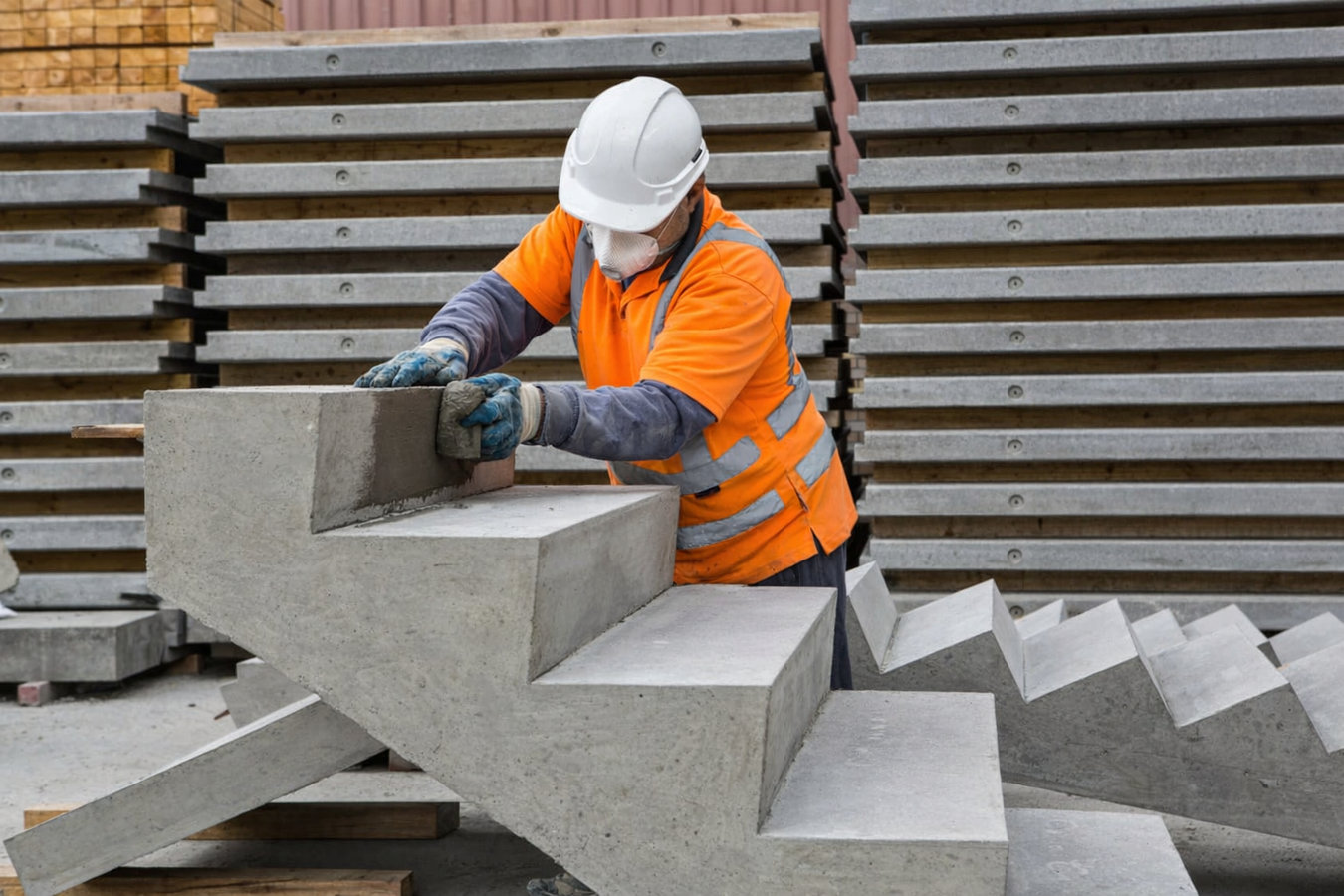
We build new concrete entry steps for front doors, side doors, and garage entries on residential properties across Rocky Hill and Hartford County. Every project starts with demolition and removal of the old steps, excavation, and laying a compacted gravel base. The base work is what determines how long your new steps stay level - pouring concrete over unstable or uncompacted soil is the single most common reason steps shift and crack within a few years. We use a concrete mix suited for Connecticut's cold-weather conditions, and every surface gets a broom or exposed aggregate finish that provides real traction when things get wet or icy.
For homeowners looking to make improvements in the same area, we also build slab foundations for additions, sheds, and garage floors on the same properties. We handle the permit application with Rocky Hill's Building Department and coordinate the required inspection. When the job is done, we walk you through care instructions - specifically what to use and avoid on the surface through the first winter.
Best for homeowners replacing crumbling, settling, or cracked steps at the primary entrance - built with proper base prep and a slip-resistant finish.
Suits properties where a secondary entrance or attached garage has steps that have shifted, cracked, or become a trip hazard over time.
Ideal when the step count triggers Rocky Hill's handrail requirement, or when safety for children or older family members is a priority regardless of code.
Fits Rocky Hill homes from the mid-20th century where original steps have exceeded their useful life and need full removal before new construction begins.
Rocky Hill sits in Hartford County, where temperatures routinely drop well below freezing from December through March and then swing back above freezing during the day. That repeated cycling is the number one enemy of concrete steps here. Water seeps into tiny surface pores, freezes, expands, and slowly breaks the concrete apart from the inside - every single winter. A contractor who uses the right mix for cold-weather conditions and builds on a compacted gravel base is not doing anything extra. That is simply what the climate demands. Rocky Hill's Connecticut River Valley location also means soils in some parts of town include softer, poorly drained deposits near the river that require digging deeper or adding more compacted gravel before any concrete is poured. Homeowners in Wethersfield, CT face the same Hartford County freeze-thaw conditions and contact us every spring for the same reasons.
A significant portion of Rocky Hill's housing was developed in the 1950s through the 1970s. Steps from that era were often poured without a gravel base, with minimal reinforcement, and with no allowance for freeze-thaw stress. If your home dates from this period and the steps have never been replaced, they have been through 50 or more Connecticut winters. Even steps that look passable from the street may have a weakened base that a contractor can identify during a quick site visit - and doing it this spring is simpler and less expensive than dealing with a collapse or injury. Homeowners across the border in Newington, CT share the same mid-century housing stock and call us for the same assessments. For additional guidance on Connecticut's stairway construction requirements, the Connecticut Office of State Building Inspector oversees the residential building code that governs handrail requirements and construction standards statewide.
We will ask a few basic questions - how many steps, which entrance, whether there are existing steps to remove, and what finish you want. You will hear back within one business day to schedule a free on-site estimate. A firm price requires seeing the actual conditions, not just a description over the phone.
We apply for the required building permit through Rocky Hill's Building Department before any work begins. This typically takes a few business days to two weeks. We manage the process entirely - you do not make a single call to the town.
On day one, the crew removes your existing steps, excavates the area, compacts the soil, and lays a gravel base. Then the forms go in and concrete is poured and finished with your chosen surface texture. The whole pour usually takes a few hours.
Plan to use a back or side entrance for 24 to 48 hours after the pour while the concrete hardens. We coordinate the town inspection, remove the forms, and walk you through care instructions - including what to use for de-icing and when to apply the first sealer.
Free on-site estimate. Written price. No surprises. We handle the Rocky Hill permit from application to inspection.
(860) 730-0845Before we give you a price, we assess what is underneath your existing steps. If the soil is soft or the old base was inadequate, we tell you that before a single shovel moves - because fixing the base is what determines whether your new steps last 5 years or 40. You get the full picture before you commit.
The Town of Rocky Hill requires a permit for steps construction, and we handle the entire process - application, coordination, and inspection scheduling. When the job is done, it is permitted and on the record. That matters whether you plan to stay in your home or sell it. We have been navigating this process locally since 2015.
Every set of steps we build uses a concrete mix suited for Connecticut cold-weather curing and gets a broom or exposed aggregate finish that provides real grip in wet and icy conditions. These are not upgrades. They are the baseline for steps that are expected to survive Rocky Hill winters.
We follow construction standards developed by the Portland Cement Association for base preparation, mix design, curing, and surface finishing. Working to a recognized standard means your steps are built the same way a qualified contractor anywhere in New England would build them - not to the minimum someone can get away with.
Every steps project starts with an honest look at what is underneath and ends with a walk-through of how to care for the new surface through your first Rocky Hill winter. That is how we have been working since 2015, and it does not change job to job.
Add a new concrete slab for a garage addition, shed base, or expanded floor area alongside your steps project.
Learn MoreAddress a slope or grade change near your entry at the same time to stabilize the soil that supports your new steps.
Learn MoreSpring project slots fill fast - reach out now for a free on-site estimate and we will lock in your start date before the busy season.