Loading...
Serving Rocky Hill, CT and surrounding areas. (860) 730-0845
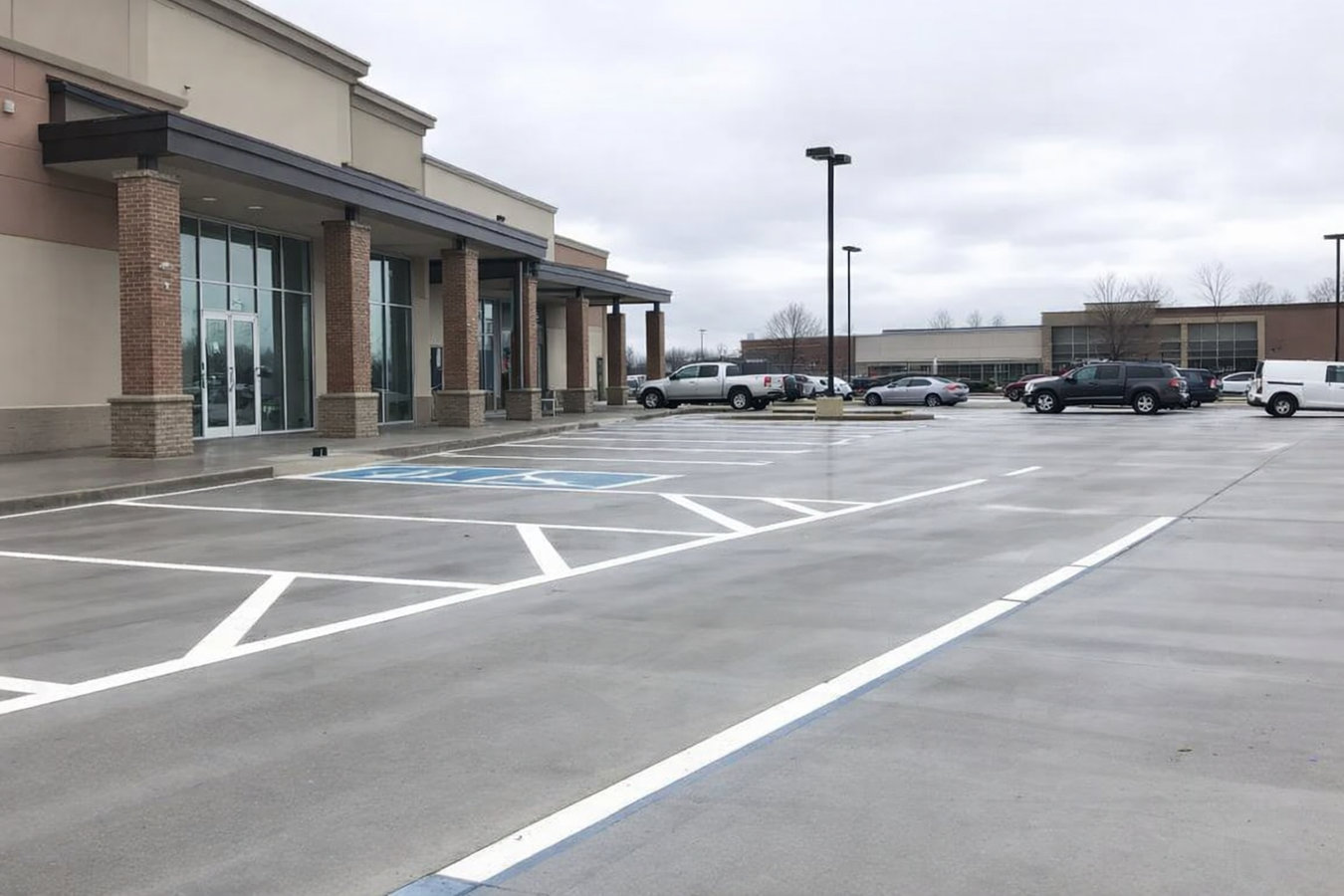
A gravel lot or failing asphalt surface creates drainage problems, liability exposure, and a poor first impression. A properly built concrete lot holds up for decades and requires almost no maintenance.
Concrete parking lot building in Rocky Hill means excavating the existing surface, laying a compacted gravel base, and pouring a four-to-six-inch concrete slab sized for the vehicles it will carry. Most residential and small commercial lots take two to five days from excavation to final pour, with the surface curing and ready for vehicle traffic within seven days.
Rocky Hill property owners - homeowners with multi-car households, small business owners along the Silas Deane Highway corridor, and landlords with multi-family buildings - come to us when their gravel lots have become a mud problem or their old asphalt is beyond patching. Concrete costs more upfront than asphalt, but it outlasts it by decades and eliminates the recurring resurfacing cost. Homeowners who are also addressing their driveway often look at concrete driveway building at the same time to maximize efficiency and keep the property looking consistent.
Every job comes with a free on-site estimate, permit management with Rocky Hill's Building Department, and a written quote that itemizes excavation, base prep, the pour, and cleanup - so there are no surprises on the final invoice.
If the top layer of your existing concrete is peeling away in thin chips - especially near the edges or in areas that stay wet - the surface has been compromised by years of freeze-thaw cycles and road salt exposure. In Rocky Hill's winters, this kind of surface damage gets worse quickly once it starts, and patching rarely holds for more than a season or two.
Standing water after a rainstorm means the surface is no longer draining correctly - either the slope has shifted or low spots have developed from ground movement underneath. In Connecticut, that pooled water also becomes a freeze hazard in winter and accelerates the breakdown of whatever surface you have.
Hairline cracks are normal in older concrete, but cracks wide enough to catch a coin - or cracks that run diagonally across the slab - suggest the base underneath has shifted or settled unevenly. Rocky Hill's variable glacial soils make this kind of base movement common in lots that were not properly prepared, and it typically means the slab needs replacement rather than patching.
If you are adding parking to a property that currently has a gravel lot, a dirt area, or no defined surface at all, building a concrete lot is the most durable long-term solution. Rocky Hill's zoning rules may also require a defined, paved surface for certain property uses - worth confirming with the town before assuming gravel is acceptable.
We build new concrete parking lots for residential properties, small commercial sites, and multi-family properties across Rocky Hill and Hartford County. Every project starts with a site assessment to evaluate soil conditions, drainage, and load requirements before a single price is quoted. The excavation goes deep enough for a full compacted gravel base - the part of the job that determines how long your lot stays flat and crack-free. We slope the surface before the pour so water runs to the edges rather than pooling in the middle, which is a detail that saves you from drainage problems and winter ice hazards. Control joints are cut or tooled into the slab at regular intervals so any minor shrinkage cracking follows a predictable line instead of running diagonally across the surface.
For properties that need multiple concrete surfaces, we also handle concrete footings for structures adjacent to the lot - garages, sheds, carports, or additions - so everything is built consistently and to the same standard. We pull permits with Rocky Hill's Building Department, manage the required inspections, and walk you through the curing timeline and sealing schedule before we leave the site.
Suits homeowners converting a gravel or dirt area to a defined, durable parking surface for multiple vehicles or recreational equipment.
Best for small businesses, storefronts, or light industrial properties along Rocky Hill's Route 99 and Silas Deane Highway corridors needing a surface that handles regular commercial traffic.
Fits landlords and property managers who need a durable, low-maintenance parking surface that serves multiple tenants and holds up to daily use.
Ideal when an existing asphalt or concrete lot has deteriorated beyond patching and the base prep needs to be done correctly from scratch.
Rocky Hill sits in central Connecticut, where temperatures swing above and below freezing dozens of times each winter. Every time water works its way into a small crack or surface pore and then freezes, it expands and pushes the concrete apart from the inside. That is why the mix design, the base preparation, and the sealing schedule all matter more here than they would in a warmer state. Road salt tracked onto private surfaces from Rocky Hill's town roads and nearby Route 3 accelerates surface scaling - the flaking process that makes a lot look years older than it is. A contractor who has worked in central Connecticut winters will use a mix and sealer designed for salt exposure, not a standard residential formula. Rocky Hill's variable glacial soils - which can shift from compact gravel to soft clay within the same property - also demand a thorough site assessment and base compaction that cannot be skipped. Property owners in Hartford, CT face the same freeze-thaw conditions and salt exposure, and we apply the same standards there.
Rocky Hill has a notable concentration of small businesses, light industrial properties, and multi-family housing along the Route 99 and Silas Deane Highway corridors. Property owners in these areas often need lots designed not just for passenger cars but for occasional delivery vehicles - which means the thickness and base requirements are higher than a purely residential project. Getting the load capacity right from the start avoids expensive repairs within the first few years. Rocky Hill's zoning and environmental rules also mean that new impervious surfaces - any hard surface that prevents rainwater from soaking into the ground - require a permit and may trigger stormwater management requirements for larger lots. Neighbors in Cromwell, CT encounter the same permitting process and turn to us to manage it from start to finish.
We schedule a site visit before giving you a price - a parking lot quote done over the phone is almost always unreliable. We look at the existing surface, check the slope and drainage, and ask how the lot will be used. Expect a response within one business day of your first contact.
We apply for the required building or zoning permit from Rocky Hill's Building Department. This step usually takes one to two weeks. You do not have to make a single call to the town - we handle the paperwork and the timeline.
On the first day of work, we excavate the existing surface and soil, then bring in and compact a gravel base layer. This is the most disruptive part of the project - expect equipment noise and the area being fully inaccessible for the duration.
Concrete is poured, spread, and finished in a single day for most residential-scale lots. Control joints are cut before the slab fully hardens. After a minimum seven-day curing period, we walk the finished surface with you and provide the recommended sealing schedule in writing.
We come to your property, assess the site, and give you a written quote that covers everything - no phone estimates, no surprises.
(860) 730-0845We use a concrete mix designed for freeze-thaw exposure and salt resistance - the conditions Rocky Hill properties face every winter. A surface that looks good on pour day but starts scaling after the first freeze is not a good job, and we do not build that way.
We handle the Rocky Hill Building Department permit application as a standard part of every job. The permit triggers the required inspections and creates a record that protects you at resale. Skipping it is not an option we offer.
We build the slope and drainage into the lot before any concrete is placed. The first heavy rain after completion shows you a surface that sheds water cleanly - not one that creates new puddles against your building or property line.
Every quote covers excavation, base prep, the pour, and cleanup as separate line items. The American Concrete Pavement Association recommends written, itemized contracts for all concrete pavement work - so you can compare proposals on an equal basis and know exactly what you are paying for.
These are the practical standards that make a concrete lot last 30 or more years in central Connecticut. Every project we build in Rocky Hill follows them - because the climate and the soils here do not leave room for shortcuts.
Properly dug and poured footings for garages, carports, and accessory structures adjacent to your new lot - sized for Connecticut's frost depth requirements.
Learn MoreResidential driveway construction built on the same compacted-base, freeze-thaw-resistant standards as our commercial lot work.
Learn MorePermit season fills up fast - lock in your spring or summer start date before the calendar closes and avoid waiting another season with a surface that is failing.