Loading...
Serving Rocky Hill, CT and surrounding areas. (860) 730-0845
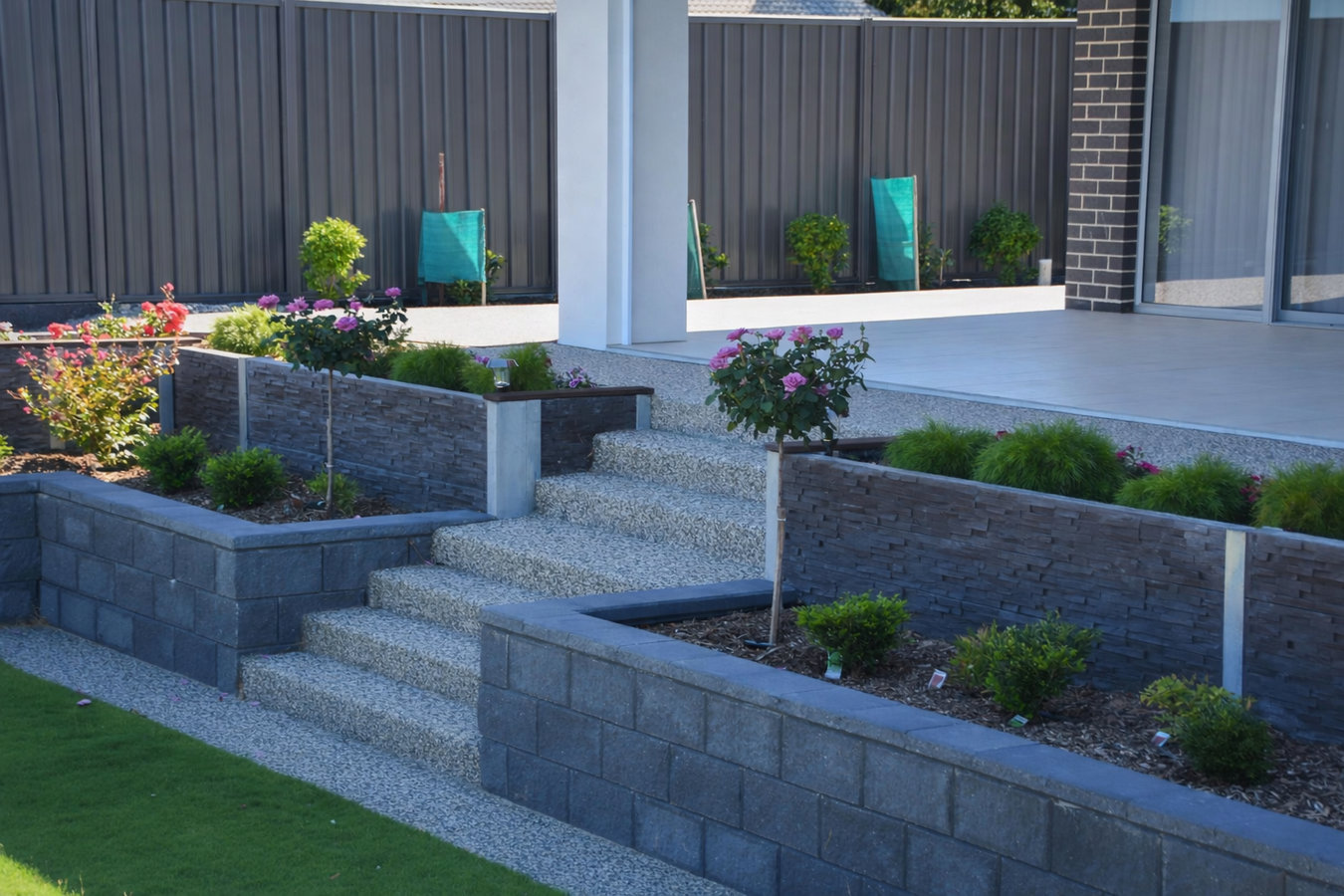
Your slope is moving a little more every winter. A properly built concrete retaining wall stops erosion, protects your foundation, and turns wasted hillside into usable outdoor space.
Concrete retaining walls in Rocky Hill hold back soil on slopes and grade changes, preventing erosion and protecting driveways and foundations. Most residential projects are two to four feet tall, completed in two to five days, and designed to handle Hartford County's repeated freeze-thaw winters.
Rocky Hill homeowners deal with hillsides that shift a little further every spring. Whether the problem is a slope washing away after rain, an older wall that has started to lean, or a driveway edge that is crumbling, concrete gives you a permanent fix. If you are also looking to upgrade your outdoor space, our concrete floor installation service pairs well with retaining wall projects that create new flat areas.
We have been working on slopes and grade changes across Rocky Hill and the surrounding towns since 2015. A clear written estimate and proper permit handling come standard on every retaining wall job we take on.
If mulch, gravel, or topsoil migrates downhill after rain, your slope is eroding faster than plants or edging can hold it. Over time this undercuts driveways, exposes tree roots, and pushes sediment toward your foundation. A retaining wall stops the movement at the source.
Horizontal cracks or a forward tilt on any wall - railroad ties, stacked stone, or old concrete block - signal that soil pressure is winning. In Rocky Hill's freeze-thaw climate this damage accelerates each winter. A wall leaning more than an inch or two from vertical is close to failing.
Standing water at the base of your home after a storm means a slope above or beside the house is directing runoff toward the structure. This is common on Rocky Hill lots where natural grade runs toward the house. A retaining wall combined with proper grading redirects that water before it causes basement moisture problems.
If the edge of your driveway is cracking or dropping where it meets a slope, the soil beneath it is shifting. This is especially common on Rocky Hill properties where driveways were cut into a hillside. Left alone, each winter makes it worse - a wall along the driveway edge stabilizes the soil and protects the pavement.
We build poured concrete walls and concrete block (segmental) walls for residential properties across Rocky Hill and Hartford County. Both options are designed with frost-depth footings and perforated drainage pipe behind the wall - the two details that determine whether a wall lasts one winter or fifty. Every estimate includes a discussion of which wall type suits your slope, soil, and budget, with no pressure toward the more expensive option.
If your project involves creating a new flat area above or below the wall, we can connect that work to related services. Homeowners who create level space with a retaining wall often follow up with concrete steps construction to provide safe access between levels. We handle permit applications on your behalf, coordinate the town inspection, and leave the site clean when the job is done.
Best for homeowners who want maximum strength and a smooth, monolithic finish - no joints for water to penetrate.
Suits properties where the slope curves or where faster installation time matters - individual units interlock for a clean, structured look.
Ideal for Rocky Hill lots with clay-heavy soil where water pressure behind a wall builds quickly after rain or snowmelt.
Fits any project requiring a Rocky Hill Building Department permit - we handle the application, scheduling, and inspection coordination.
Rocky Hill sits in Hartford County, where temperatures drop below freezing repeatedly from November through March and then warm back up - sometimes multiple times in a single week. Every freeze-thaw cycle expands and contracts the ground, which pushes against anything buried in it. A retaining wall without a deep footing or proper drainage will lean or crack within a few winters. Central Connecticut soils also include glacially deposited clay pockets that hold water rather than draining it, meaning water pressure behind a wall can build faster than homeowners expect. The combination of freeze-thaw stress and clay soil is exactly why below-ground workmanship matters more here than it would in a warmer or sandier region. For more detail on what construction looks like for properties in the area, visit our Wethersfield, CT service page.
Rocky Hill also saw significant residential development from the 1950s through the 1980s, and many of those homes sit on lots with natural grade changes that were never formally addressed. Older solutions - railroad ties, stacked stone, earthen berms - are now failing as they age. If your yard has an informal slope management system that has been in place for decades, there is a good chance it needs a proper concrete replacement before the next hard winter. Homeowners in nearby Newington, CT face the same postwar housing conditions and call us for the same reasons.
For additional guidance on permit requirements and approved contractor standards, the Connecticut Department of Consumer Protection maintains the state's home improvement contractor registration database, which you can search for free before hiring anyone.
We will ask about your slope's approximate size and whether there is an existing wall. You will hear back within one business day to schedule a free on-site visit - no honest price can come from a phone call alone.
After the site visit you will receive a written estimate breaking out excavation, drainage, wall construction, and cleanup. If your wall needs a Rocky Hill Building permit, we explain the timeline - typically one to three weeks - and handle the application ourselves.
The first day is the most disruptive. The crew excavates the area, removes any old wall material, and prepares the base. This below-ground work - footing depth and compaction - is the most important part of the entire project.
The wall goes up with gravel and drainage pipe installed behind it before backfilling. Cleanup includes hauling away all debris and restoring disturbed yard areas. If a poured wall, plan for at least a week before heavy loading against it.
Free on-site estimate. Written price before any work starts. Permit handling included.
(860) 730-0845Every retaining wall we pour is founded below Connecticut's frost depth - roughly 36 to 42 inches. That depth is what keeps footings from heaving through Rocky Hill's repeated freeze-thaw winters and keeps the wall plumb for decades.
Rocky Hill's glacially deposited clay pockets hold water rather than draining it. We size the gravel backfill and drainage pipe to match the specific soil conditions on your property - not a one-size-fits-all formula.
We file the Rocky Hill Building Department permit application, schedule the inspection, and coordinate sign-off before we close the job. The inspection record becomes part of your home's history and protects you at resale. Standards for retaining wall construction are maintained by the American Concrete Institute.
We have worked on slopes and grade changes across Rocky Hill, Wethersfield, Newington, Cromwell, and the surrounding towns since 2015. Local soil conditions and permit office expectations are not a surprise to us - they are built into how we plan every job.
Every retaining wall we build is designed for the specific site - soil type, slope angle, drainage needs, and local permit requirements are all factored in before a shovel hits the ground. That is how a wall holds for 50 years in central Connecticut.
Pour a new basement or utility floor to complement the flat space your retaining wall creates.
Learn MoreAdd safe, durable steps to connect the grade levels separated by your new retaining wall.
Learn MoreRocky Hill's spring rush starts early. Contact us today for a free on-site estimate and written price before the schedule fills.